
Bringing Community and Awareness to Children of Wounded, Ill and Injured Veterans
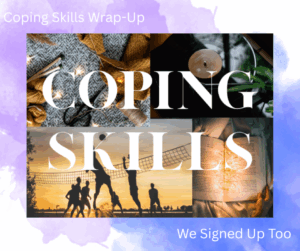
“All good things must come to an end.” This quote is a haunting reminder that nothing is infinite. Just as summer will always lead into fall, so does a series have to come to an end sometime. As I was sitting down to write this last article in my series on coping skills, another quote popped into my mind, “Don’t cry because it’s over, smile because it happened.” Endings don’t always need to be a cause of sadness. Rather they can be a symbol of endurance.
That is why I want to thank you, the reader, for joining me on this journey as I complete my first article series on this blog. There is so much more that I can add when it comes to coping skills, but it is my hope that there were valuable skills that have helped you throughout this short series. Now, without further ado, let us jump into this last article.
Reading
The first article in this series was based on reading and how reading can be a healthy alternative to movies and technology. I would have to say my favorite part of that article was the explanation of what happens when an individual sits down to read:
“Reading is magical. It’s an intimate back and forth between us, the readers, and the fictional characters in the story. This beautiful passing of time allows us to dive into a world that is not our own, taking a moment away from reality and allowing us to experience a life vastly different from our own.”
Ever since researching and writing that article I have definitely gained a new perspective on reading and how this exciting experience (that usually leaves many of us staying up way past our bedtime) can also be a healthy coping skill to keep in our toolbox.
Music
I am pretty sure I mentioned this in the article but it is worth repeating, I LOVED writing the article on music. As a huge fan of music myself, having the opportunity to research music as a coping skill was not only extremely interesting but also very eye opening. My favorite sentence from the music article was:
“I want to do justice to the amazing healing powers of music while also bringing attention to the possible pitfalls that can come with music, if we are not careful.”
Before writing that article, I was not fully aware of the negative effects that can result from listening to music. If we are not careful, listening to depressing or sad music can make us feel worse than before we turned it on and even influence us in the wrong way. My research, however, has also shown that music can be an extremely healing outlet that promotes emotional regulation, intelligence, and social connections.
Other Coping Skills
Music and reading are not the only methods we can use to cope. Art is also a wonderful way to relieve anxiety and stress. I know someone who, instead of drawing, copies designs from drawing books to calm down. Her method is not ordinary, but that’s what is so amazing about coping methods, they don’t have to be ordinary or “normal”, they can be whatever brings you to a state of calm during times of stress or even the aftermath of a hard experience. Some other forms of coping can be:
– crocheting
-knitting
-sports
-writing
-drawing
-journaling
-scrapbooking
-jewelry making
-rock tumbling
-hiking
There are countless activities that can act as a coping skill. Having a coping “toolbox” as I like to call it, (a collection of different activities you can do during or after a distressing time) will give you direct access to grounding exercises and activities that can act as one more step towards healing from difficult circumstances.
“All good things must come to an end.” With the conclusion of this article, also comes the ending of this series. As I have learned so much through my research in this series about different skills we can use to keep ourselves regulated and grounded, it is my hope that there was something in this series that was helpful to you. What are some coping skills you find most helpful?
POSTED BY: SINAIYAH EMAMI
IN: ARTICLES